Air Conditioning Peptide Testing Laboratories Third-party Peptide Analysis
Peptide Pureness Overview 98%, 99% & Research-grade Clarified Prg

- Even minor impurities can modify outcomes, minimize reproducibility, or present undesirable variables into a research study.
- Don't be upset-- this is regular and is normally established by different analyses (like amino acid evaluation).
- The peptide example is dissolved in a compatible solvent and filled right into an autosampler.
- These are generally present at extremely reduced levels in appropriately made peptides and are governed by ICH Q3C standards for acceptable limits.
Efficiency Cookies
HPLC can support insurance claims concerning chromatographic purity, impurity top problem, and destruction patterns when the technique is appropriate and the chromatogram is readily available. If a peptide is re-tested after storage space anxiety, HPLC can expose whether new impurity peaks have appeared or whether the main height location has declined. This links directly with dealing with topics such as peptide storage and peptide reconstitution. As an examples of product-level context, contrast the anticipated masses for Retatrutide, BPC-157, and Semaglutide.Checking Out Mass Spectrometry Results On A Coa
BOC Sciences uses thorough peptide testing services to clients throughout industries, making sure products satisfy stringent market requirements and ensuring item uniformity, safety, and efficiency. It also supports traceability-- each batch's laboratory validation record can be linked to its COA and regulative filings, creating a clear paper trail. In other words, strenuous laboratory recognition is how you prove to regulators that your peptide meets all high quality requirements. It helps stay clear of conformity problems such as fallen short audits or item recalls as a result of quality problems. This not just satisfies lawful demands yet eventually shields client safety and security.What The Contaminations In Fact Are
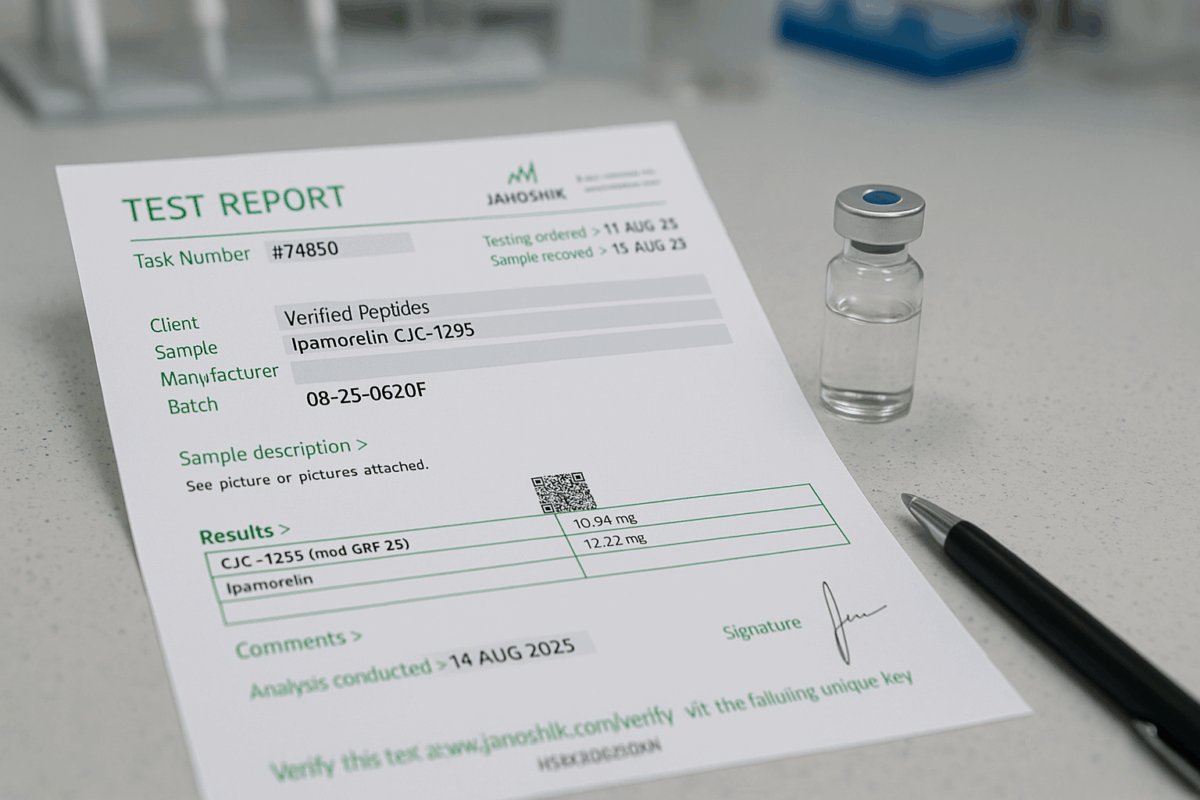
The table listed below web links common task goals to functional logical panels and the kind of decisions they aid support. Asparagine and glutamine residues can undertake deamidation, changing the peptide's cost and hydrophobicity. Deamidation is one factor storage conditions issue, particularly after a peptide has actually been reconstituted. Every product we lug is lab-tested and confirmed by third-party companions, so researchers understand exactly what they're dealing with. Peptides having methionine or cysteine residues are vulnerable to oxidation. Methionine can be oxidized to methionine sulfoxide; cysteine can form unwanted disulfide bonds or be oxidized to sulfinic or sulfonic acid derivatives.